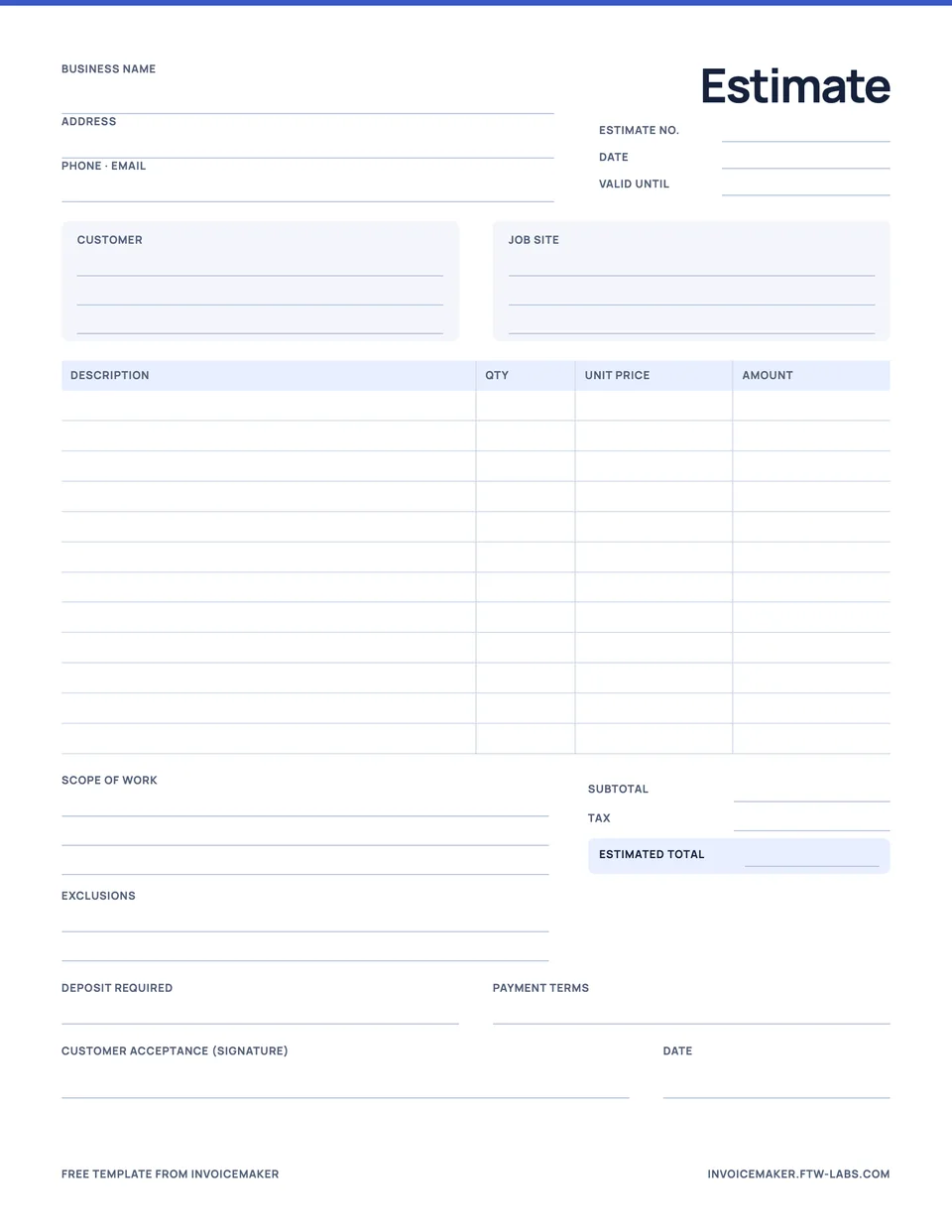
What a job estimate needs
An estimate is an approximate price for a defined piece of work, sent before the work starts. Whether you paint rooms, fix laptops or design websites, the customer reads it to answer three questions: what will you do, what will it cost, and what isn’t included? Answer all three and most customers can decide without another call.
It also protects you. When the customer later asks why the ceiling wasn’t painted, the estimate that says “ceilings excluded” settles it in one line.
How to write an estimate in 7 steps
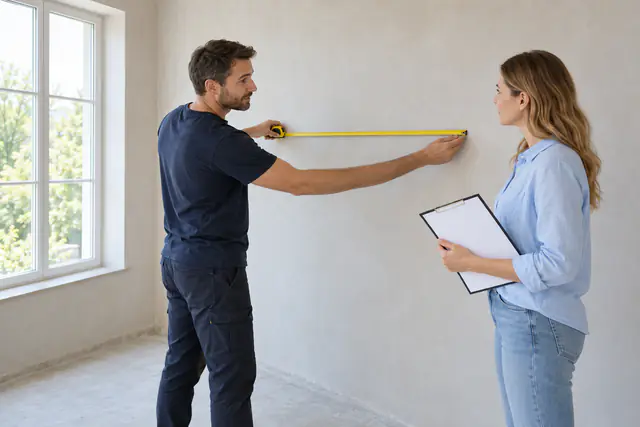
- See the job or ask enough questions. Measure, take photos, and write down anything you can’t check yet, such as what’s behind a wall or how many revisions the client expects.
- Break the work into line items. Give labor, materials, equipment hire and disposal their own lines. One lump sum invites the question “what’s that made of?”
- Price each line. Use hours at your rate for labor and quantity at unit price for materials. If you add a markup on materials, build it into the unit price.
- Add tax and any discount. Show the subtotal, tax and estimated total separately so the customer can follow the arithmetic.
- Write the scope and exclusions. Say exactly what’s included and name what isn’t. Mention the most likely surprise and what you’ll do if you find it.
- Set a valid-until date and payment terms. Thirty days is common. Add any deposit you need to book the start date.
- Send it and ask for written approval. A signature on the estimate or a reply email saying “go ahead” is enough for most small jobs.
A worked estimate example
Estimate EST-052 for Willow House
Prepared 26 October 2026 · valid until 25 November 2026
Prepare and patch walls, two rooms: 6 hours × $55 = $330
Paint walls, two coats: 10 hours × $55 = $550
Paint and supplies: 1 × $210 = $210
Move furniture and clean up: 2 hours × $55 = $110
Estimated total: $1,200 (no tax in this example)
Scope: walls in the bedroom and hallway. Ceilings, trim and doors excluded. Colors chosen by the customer before the start date. Price assumes no water damage behind the existing paint; if we find any, we’ll stop and price the repair before continuing.
Deposit: 25% ($300) to book the start date.
Look at the last sentence of the scope. It names the most likely surprise and says what happens if it turns up. That one line prevents most estimate disputes, because the customer agreed to the process before anyone knew whether the wall was damaged.
Mistakes that make estimates go wrong
- A single lump sum. Customers can’t compare it, and you can’t show what changed when the job grows.
- No exclusions. Anything you don’t rule out, the customer may assume is included.
- No expiry date. A customer who accepts eight months later expects last year’s price.
- Changes agreed only by phone. Update the estimate or put the change in writing before you do the extra work.
- Calling it a quote. If the price can move, don’t title it as fixed. The estimate vs quote guide explains the difference.
Turning the estimate into an invoice
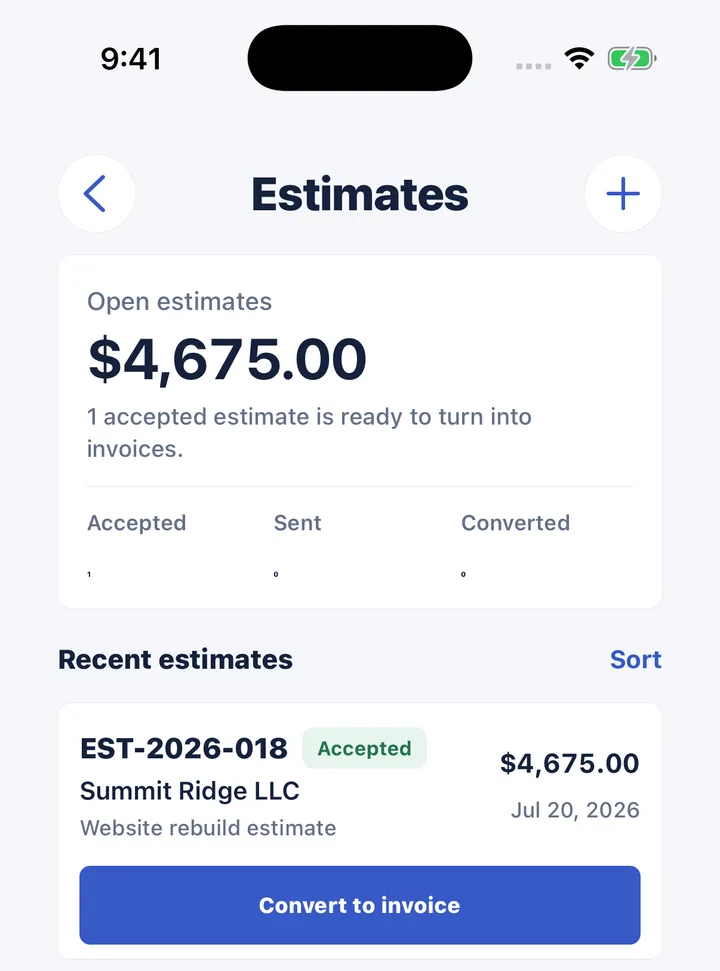
When the customer accepts, the estimate becomes the basis of your invoice. In InvoiceMaker, mark the estimate accepted and tap Convert to invoice. The client and line items carry over, so you only edit what changed, set the due date and send the PDF.
Prefer to start on paper? Download the free estimate template, which has the same sections as the example above plus a line for the customer’s signature.
Questions
Should I charge for writing an estimate?
Many trades give estimates for free and some charge a call-out or assessment fee for larger jobs. Either is fine if you tell the customer before you visit, and many businesses credit the fee against the job if they win it.
Can I give a price range on an estimate?
Yes. A range such as “6 to 8 hours” is honest when you can’t see the whole job. Explain what would push it to the top of the range, and say you’ll check with the customer before going past it.