The difference between an invoice and a receipt
An invoice is a request for payment. You send it after you deliver work or goods, and it tells the customer how much they owe, by when, and how to pay. A receipt is proof of payment. You issue it once the money has arrived, and it records how much was paid, when, and by what method.
The order matters. An invoice comes first and stays open until it is paid; the receipt comes after and closes it. A shop that takes payment at the counter usually skips the invoice and hands over a receipt straight away. A contractor or freelancer who bills after the work usually sends both.
Invoice vs receipt side by side
| Invoice | Receipt | |
|---|---|---|
| Purpose | Asks for payment | Confirms payment |
| When it’s issued | After the work, or at an agreed billing point | After the money arrives |
| Main amount | Amount due | Amount received |
| Dates | Issue date and due date | Payment date |
| Payment details | How the customer should pay | How the customer did pay |
| What it proves | That you billed for something | That money changed hands |
| Typical number | INV-231 | RCT-231, referencing INV-231 |
What goes on an invoice
An invoice needs enough detail for the customer to check it and pay it without calling you:
- Your business details and the customer’s billing details.
- A unique invoice number and the issue date.
- Each item of work or goods, with quantities and rates.
- Subtotal, any tax or discount, and the total in a stated currency.
- The due date and payment terms.
- How to pay: bank details, a payment link, or who to make a check out to.
The invoice writing guide goes through each field with a worked example.
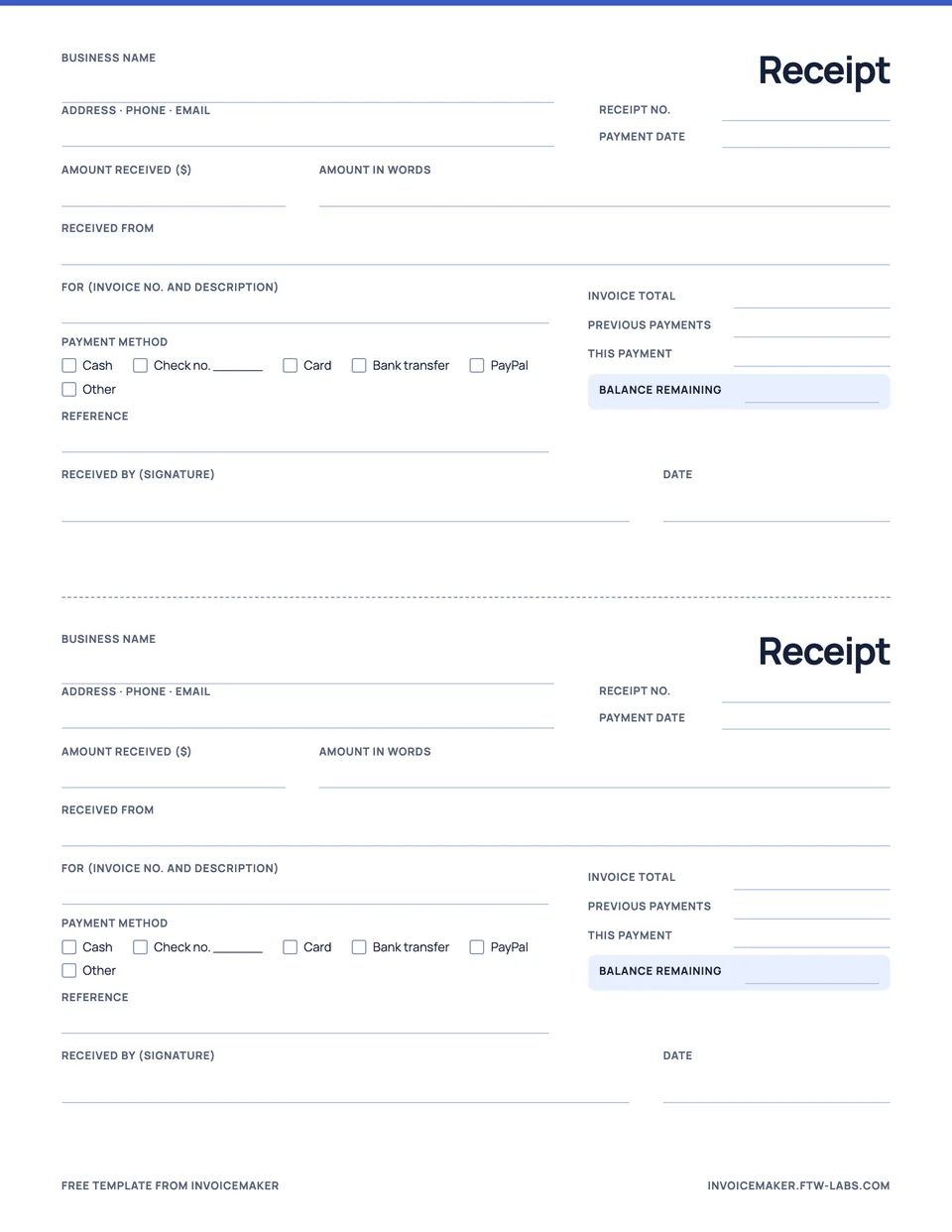
What goes on a receipt
A receipt is shorter. It answers who paid, how much, when, how, and for what:
- Your business details and a unique receipt number.
- The date the payment was received and who paid it.
- The amount received and its currency.
- The payment method, such as cash, check number 1042, or a bank transfer reference.
- What the payment was for, ideally the invoice number.
- The balance still owed, if the payment didn’t cover the whole invoice.
See how to make a receipt for a step-by-step version, or print the free payment receipt template.
One job, both documents
Say Ruiz Home Repair replaces a bathroom fan for Maple Street Dental. On 3 October, Ruiz sends invoice INV-231 for $380, due on 17 October. Ten days later the office pays by bank transfer. Ruiz records the $380 and sends receipt RCT-231, dated 13 October, showing $380 received and a balance of $0.
The office’s bookkeeper now has both halves of the story. The invoice explains what the $380 was for, and the receipt shows it was settled. If the office had paid $200 first, the receipt would show $200 received and the invoice would still show $180 due. The partial payment guide covers that case in detail.
Is an invoice a receipt?
No. An unpaid invoice only proves that you asked for money. Some businesses stamp an invoice “Paid” and send it again as a record, and for many customers that’s enough. A separate receipt is clearer when someone needs proof of the payment itself: an employee claiming expenses, a landlord reimbursing a repair, or anyone who paid in cash.
Which one do you need?
- You’ve done the work and haven’t been paid: send an invoice.
- The customer paid on the spot: give a receipt. No invoice needed.
- The customer paid an invoice: record the payment and send a receipt that references the invoice.
- You took a deposit: send a receipt for the deposit and keep the invoice open for the balance.
- A customer who already paid asks for “an invoice”: they usually want proof of purchase, so a receipt or a paid invoice will do.
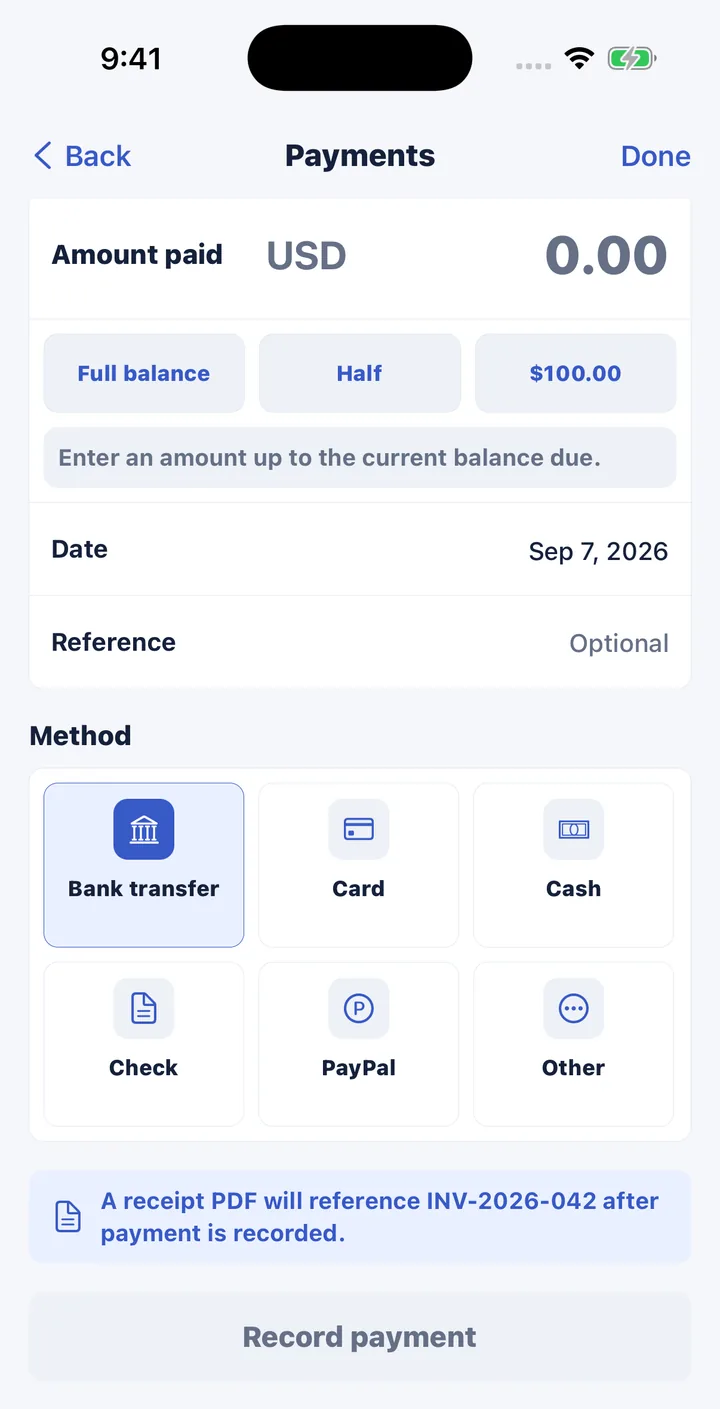
Keeping both tidy is easier when they live in one place. In InvoiceMaker you send the invoice as a PDF, then record the payment against it when it arrives. The balance updates, and the receipt PDF references the invoice number so the two documents always match.
Questions
Is a paid invoice the same as a receipt?
They overlap. An invoice marked paid shows the bill was settled, which is enough for many customers. A separate receipt is clearer when someone needs proof of the payment itself, such as the date, amount and method for an expense claim.
Do I have to give a customer a receipt?
It depends on where you work and how you were paid, so check your local rules. Even where it isn’t required, customers often need one for their own records, and it costs you a minute to send.