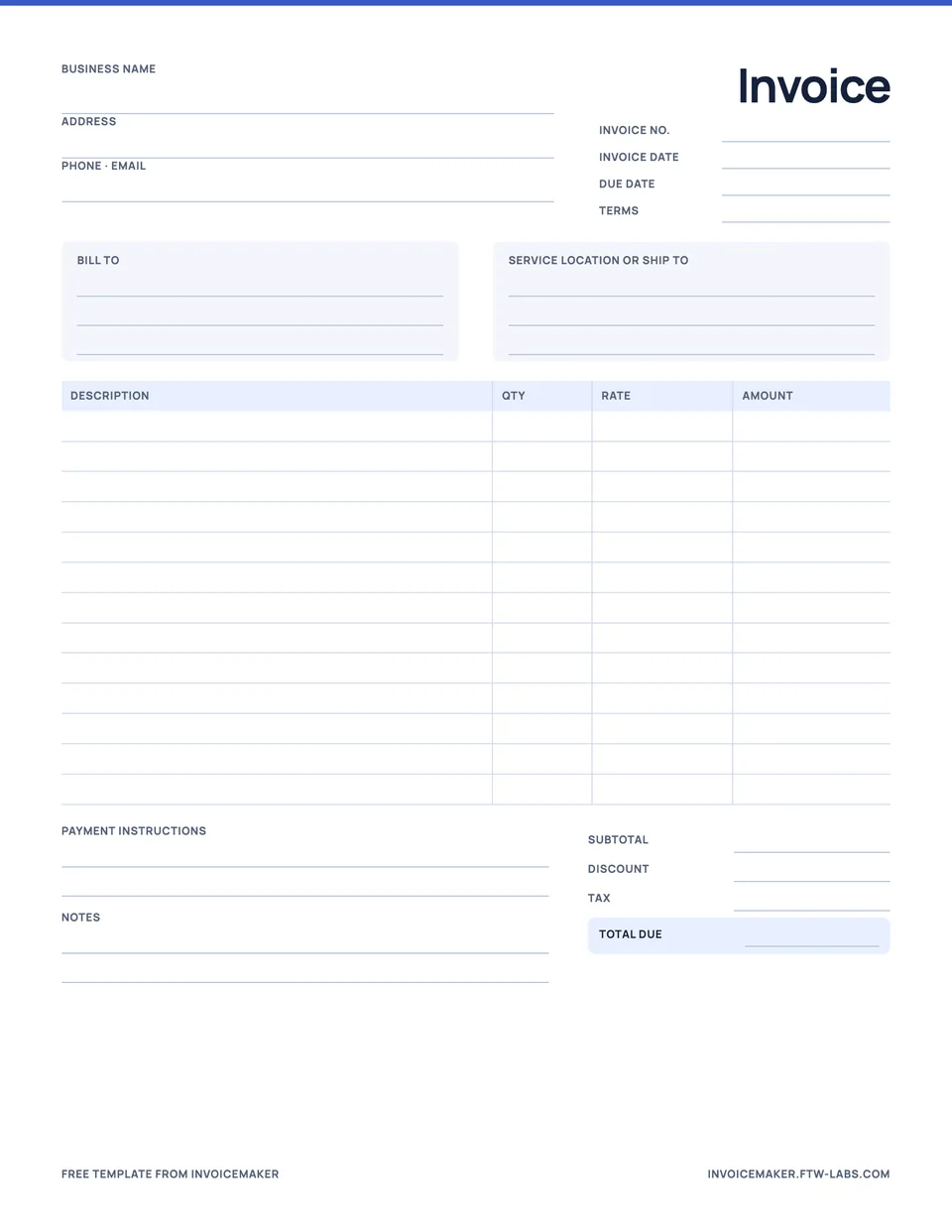
What does Net 30 mean?
Net 30 is a payment term that gives the customer 30 calendar days from the invoice date to pay the invoice in full. “Net” refers to the full amount owed after any agreed discounts, and “30” is the number of days. An invoice dated 6 October 2026 with Net 30 terms is due on 5 November 2026.
Net 30 is the most common term between businesses in the US, so a company’s accounts team will often assume it unless you say otherwise. For one-off jobs with homeowners, shorter terms are usually more practical.
How to calculate a Net 30 due date
Start counting the day after the invoice date and include weekends and holidays. Day 30 is the due date.
| Invoice date | Net 30 due date |
|---|---|
| 1 October 2026 | 31 October 2026 |
| 15 October 2026 | 14 November 2026 |
| 31 October 2026 | 30 November 2026 |
| 30 November 2026 | 30 December 2026 |
| 31 January 2027 | 2 March 2027 |
The last row is the one people get wrong. Thirty days isn’t the same as “a month”, and February is short. Printing the actual date next to “Net 30” removes the guesswork for both of you.
Net 30 vs shorter payment terms
The longer the term, the longer you finance the customer’s purchase. On a $2,000 job finished on 1 October, the difference looks like this:
- Due on receipt: payment expected straight away, often within a few days in practice.
- Net 7: due 8 October.
- Net 14: due 15 October.
- Net 30: due 31 October, a full month of waiting for $2,000.
Business clients with weekly or monthly payment runs may not be able to pay faster than Net 30, and insisting can cost you the work. For individuals and small one-off jobs, Net 7 or due on receipt is normal and rarely questioned. The payment terms guide compares every common term side by side.
What 2/10 Net 30 means
“2/10 Net 30” offers a 2% discount if the customer pays within 10 days; otherwise the full amount is due within 30. On a $1,500 invoice, the customer can pay $1,470 by day 10 or $1,500 by day 30.
Offer it when getting paid three weeks sooner is worth more to you than 2% of the invoice. Make sure the discount and both dates are printed on the invoice, so the customer doesn’t have to work out what they owe.
How to write Net 30 on an invoice
Put the term and the date together, near the total, and say how to pay:
“Terms: Net 30. Payment due 5 November 2026.”
“Net 30: please pay $1,240 by 5 November 2026 by bank transfer, quoting INV-1026.”
“2/10 Net 30: pay $1,215.20 by 16 October 2026, or $1,240 by 5 November 2026.”
In the last example the invoice is dated 6 October, so day 10 is 16 October and 2% of $1,240 is $24.80. Agree on Net 30 before the work starts, ideally in your estimate, rather than letting it appear for the first time on the invoice.
When a Net 30 invoice is late
Send a short, friendly reminder the day after the due date with the invoice number, the amount and how to pay. Most late payments are forgotten rather than disputed. If it is still unpaid two weeks later, call. A late fee only applies if the customer agreed to it before the job, and some states limit how much you can charge.
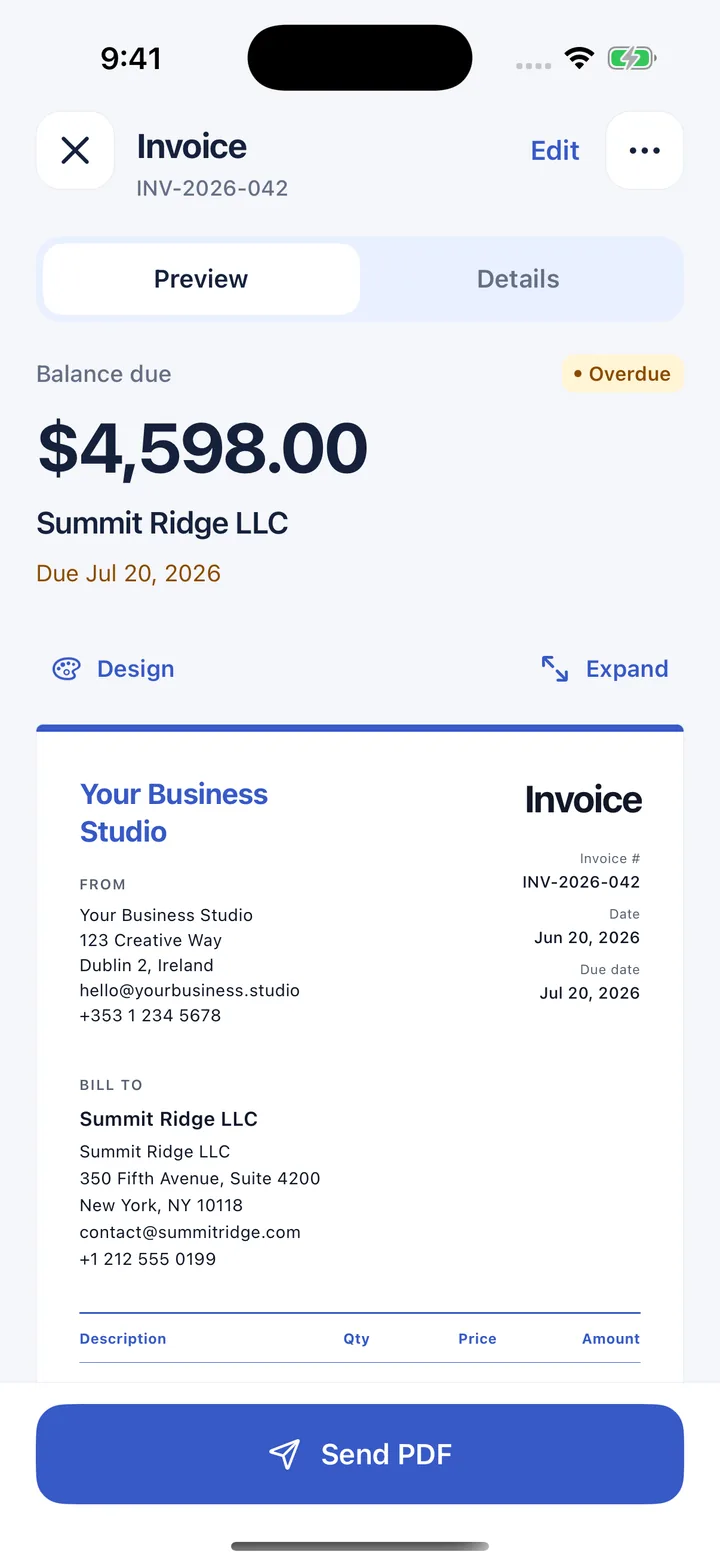
In InvoiceMaker, tap Net 30 under Terms and enter the due date when you create the invoice. Both print on the PDF. Once that date passes without payment, the invoice is flagged as overdue on the Overview screen, and you can prepare a reminder with the balance and due date filled in, then send it from your own email or messages.
Questions
Does Net 30 include weekends?
Yes. Net 30 counts calendar days, so weekends and public holidays are included. If day 30 falls on a weekend, many customers pay on the next business day, so print the exact date to avoid any doubt.
Is Net 30 the same as one month?
Not quite. Net 30 is exactly 30 days, so an invoice dated 31 January is due on 2 March in a normal year, not 28 February. If you mean the end of the following month, write the date or use EOM terms instead.